
Best AI Video Generators for Marketing (2026): Tested by Ad Use Case
Best AI video generators for marketing: we tested Seedance 2.5, Kling 3.0 and Veo 3.1 across product, UGC and TikTok ads, comparing output quality, video length and generation time.
The best AI video generators for marketing in 2026 vary by ad use case. In our tests, Seedance 2.5 maintained consistent product and character details across all three briefs, while both Seedance 2.5 and Kling 3.0 delivered the full 10-second output in every test. Veo 3.1 stood out for realistic texture and physical motion in these runs, but each generation was limited to 8 seconds.
These findings come from running the same three ad briefs — a product video, a UGC ad, and a TikTok ad — through Seedance 2.5, Kling 3.0, and Veo 3.1 inside BuzzVideo AI in September 2026. Each test used a vertical 9:16 format and the same reference material across all three models.
The exact test date and BuzzVideo AI account plan could not be verified from the test notes available for this article, so those details are not included as part of the test metadata.
In this article:
- What the tests showed
- What our tests suggest for each ad job
- What actually decides whether an AI video is usable in an ad
- The Router Test: three briefs, three models, side by side
- Seedance 2.5, Kling 3.0, and Veo 3.1: what each is built for
- Multi-model platforms vs. single-model tools
- Which model should your team test first?
- FAQs
- Which AI video generator should you actually use?
If you're a brand, freelance marketer, or content team producing ads with AI, the challenge is not simply finding the most powerful video generator. It's finding the model that best fits the type of ad you're making.
Different models have different strengths. Some are better suited to product-focused creative, while others stand out for creator-style content, character consistency, motion, audio, realism, or generation controls. Instead of comparing published specifications alone, this article looks at AI video generators through specific advertising use cases and compares what each model produced from the same briefs.
What the tests showed
Seedance 2.5 maintained product labels, skin texture, lighting, and character details consistently across the three briefs, and delivered the full 10-second output in every test. ByteDance also lists support for videos up to 30 seconds in a single generation and extensive multimodal reference inputs, but we did not test those capabilities here. They make Seedance 2.5 worth considering for longer or more reference-heavy workflows, but they are not evidence that it performs best in those scenarios.
Kling 3.0 also delivered the full 10-second output in all three tests. Its UGC and TikTok outputs maintained a consistent creator appearance, with convincing motion and short-form pacing, while its product-video output maintained a clear label and natural lighting. Kuaishou lists support for videos up to 15 seconds, native multilingual audio, reference inputs, and improved consistency, although these published capabilities were not fully tested in our three briefs.
Veo 3.1 stood out for realistic serum texture and physical motion in our tests. However, each generation was limited to 8 seconds, so it did not complete the full 10-second requirement in any of the three briefs. We therefore evaluated its visual execution separately from whether it met the requested video length.
Overall, the results suggest that model choice depends on the requirements of the ad rather than on a single overall ranking. Teams working across different ad formats may benefit from being able to switch models within the same workflow instead of relying on one generator for every brief.
What our tests suggest for each ad job

If you don't want to read the full test, here's a quick guide to which model we would test first for each ad use case based on these three runs.
| Ad use case | What to test first | Why |
|---|---|---|
| Product video | Seedance 2.5 or Kling 3.0 | Both completed the full 10-second brief while keeping the product label and product details visually consistent. In these runs, both produced polished product-video results, so either is worth testing first for this type of brief. |
| UGC ads | Seedance 2.5 or Kling 3.0 | Both completed the full 10-second brief and maintained convincing creator and product consistency in this test. |
| TikTok / short-form ads | Kling 3.0 or Seedance 2.5 | Both completed the full 10-second brief and delivered a clear visual hook with fast-paced short-form execution. Veo 3.1 also matched the short-form direction well, but returned an 8-second output rather than the requested 10 seconds. |
| Brand video | Not tested | We have not run a dedicated brand-video brief, so we make no pick here. |
The main takeaway is that "best" does not necessarily mean using the same model for every job. A product-focused ad may depend heavily on packaging consistency and product detail, while a UGC or short-form ad may place more emphasis on natural motion, creator consistency, pacing, and whether the model can deliver the required video length.
Our tests cover only three short-form advertising briefs. We have not yet tested longer narrative or dedicated brand-video workflows, so published capabilities such as longer generation limits should be treated as reasons to test a model rather than proof that it performs better in those scenarios.
For teams producing different types of ad creative, being able to switch between models within one workflow may be more practical than relying on a single generator for every brief.
So rather than asking, "Which AI video generator is the strongest?", a more useful question is:
Which AI video generator best fits the requirements of the ad I'm making right now?
That's the approach we used for this comparison.
What actually decides whether an AI video is usable in an ad

Rather than comparing AI video models only by published specifications, marketing claims, or third-party leaderboards, we looked at five factors that affect whether an output is practical for ad production. Our Router Test directly compares visual quality, consistency, and turnaround time; generation cost and commercial-use rights are covered separately using BuzzVideo AI's published pricing and terms.
Can you run the clip as-is, or does it need post-production?
The first question is simple: how much work does the generated clip need before it can be used in an ad? We looked at:
- Visual quality
- Character consistency
- Product detail
- Naturalness of motion
- Scene continuity
- Camera movement
- Stability of text and brand elements
For product ads in particular, looking polished is not enough. If the logo, packaging, colors, or product shape changes between shots, the clip may still need significant post-production before it is ready to use.
How much does each generation cost in credits?
Cost matters when a team needs to produce and test ad creative at scale. Credit requirements vary by model, video length, resolution, and plan, so current pricing should be considered separately from the output-quality results in our tests.
As of October 2026, BuzzVideo AI's published examples list Seedance 2.5 at 417 credits for a 10-second HD video, Veo 3.1 at 576 credits for an 8-second HD video, Veo 3.1 Fast at 144 credits for an 8-second HD video, and Kling 3.0 at 63 credits for a 5-second video.
These are published pricing examples rather than the recorded credit usage from the nine test runs in this article. Pricing, model availability, and credit requirements may change, so check the BuzzVideo AI pricing page for the latest details.
How long does each model take?
Generation time also affects production efficiency, particularly when a team is creating multiple ad variations.
For each of the nine runs in this test, we recorded the approximate time from submitting the prompt to receiving the finished output, along with whether the generation failed or required another attempt. None of the nine recorded runs failed or needed a regeneration.
These generation times were recorded as approximate ranges from individual test runs rather than precise benchmark measurements. Queue times can also vary with platform load, so the figures below show what happened in these runs rather than how fast each model generally performs.
Can you use the output commercially?
Commercial-use rights are another practical consideration when AI-generated video is intended for paid advertising or client work.
BuzzVideo AI states that commercial use is included on its paid plans, covering uses such as ads, social media, product pages, and paid client work. Paid plans also provide watermark-free output. Video generation is not available on the Free plan, and access to individual video models varies by paid plan. See the BuzzVideo AI pricing page and Terms of Service for the current details.
If you use a model through another provider or directly through its own service, check the terms of the specific plan you are using before publishing a campaign. Commercial-use rights, watermark rules, and plan restrictions can differ between services and may change over time.
The Router Test: three briefs, three models, side by side

In this article, the "Router Test" means running the same advertising brief through multiple AI video generators and comparing the outputs side by side.
Rather than comparing Seedance 2.5, Kling 3.0, and Veo 3.1 based only on their published specifications, we tested how each model handled the same three advertising scenarios: a product video, a UGC ad, and a TikTok-style short-form ad.
What we kept consistent across the tests
For each advertising scenario, all three models received the same:
- Ad brief
- Product information
- Creative direction
- Output aspect ratio
- Requested video length
- Reference material
- Evaluation criteria
We compared the outputs based on product and character consistency, visual quality, naturalness of motion, scene continuity, camera movement, and the stability of text and brand elements.
We also recorded the final video length, approximate generation time, and whether the generation failed or required another attempt.
The generation times shown below were recorded as approximate ranges from individual test runs rather than precise benchmark measurements. Queue times can vary with platform load, so these figures should not be treated as general speed measurements for each model.
The comparison below is based on the recorded outputs and test notes currently available for these runs. Resolution and per-generation credit usage could not be independently verified from the surviving test records, so they are not used as comparison criteria in this article.
The Veo runs are identified as Veo 3.1 in the available test notes, but the exact model variant could not be independently re-verified.
One limitation applies to Veo 3.1. Google's Gemini API documentation lists supported generation lengths of 4, 6, and 8 seconds, with an 8-second duration required when using reference images, video extension, or 1080p and 4K output. Our briefs requested 10 seconds, so Veo 3.1 returned 8-second clips in all three tests.
We treated that duration limit separately from visual execution. Veo 3.1 supports video extension, but we did not use it in this comparison because adding another generation step would change the time, cost, and workflow being compared.
LUMÉA is a fictional skincare brand created for this test. Using a fictional product reduces reliance on familiarity with existing real-world packaging and gives each model the same product description and reference material to work from.
Product Video Test
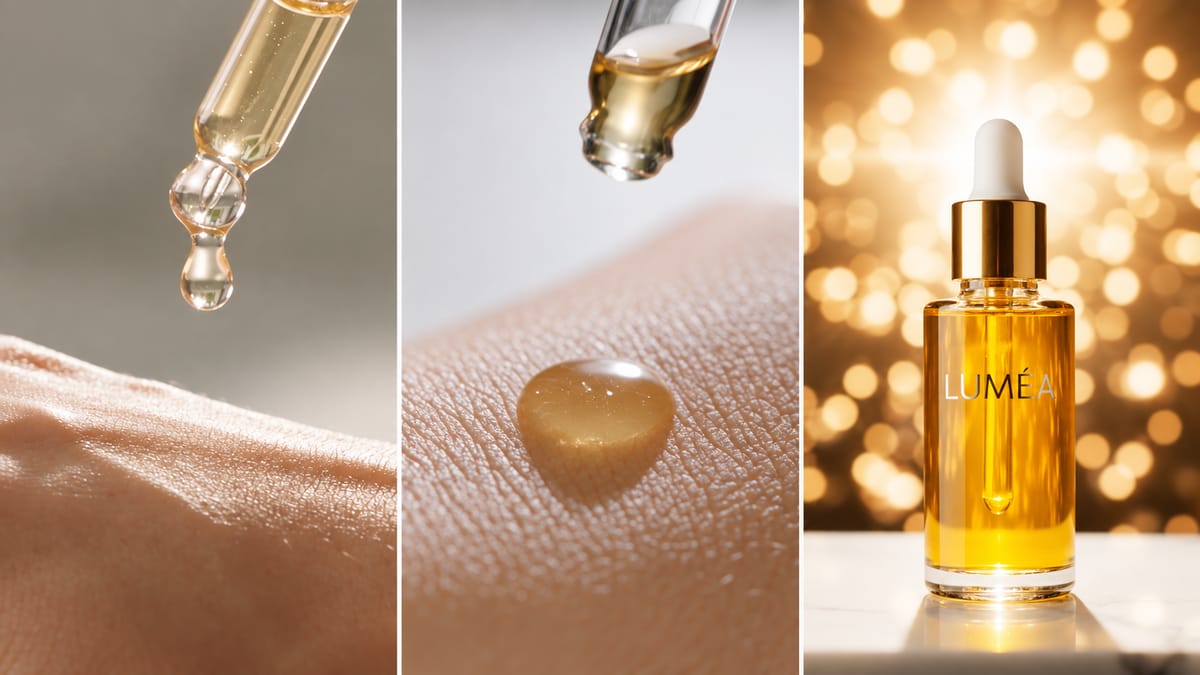
Prompt: Create a 10-second vertical 9:16 product advertisement for LUMÉA Vitamin C Brightening Serum.
Scene 1 (0–3s): Show the LUMÉA serum bottle standing alone on a clean white bathroom counter. Bright natural morning light enters from a nearby window. Start with a medium shot and slowly push the camera toward the product.
Scene 2 (3–7s): Move into a close-up of the premium glass dropper. The dropper releases one small drop of lightweight golden serum onto the back of a woman's hand. Show the serum texture clearly and realistically.
Scene 3 (7–10s): End with a premium hero shot of the LUMÉA serum bottle centered in the frame, with soft glowing light in the background.
Keep the LUMÉA logo, bottle shape, cap, colors, proportions, and product details consistent throughout the entire video. Use realistic product textures, natural lighting, smooth camera movement, and a premium modern skincare advertising style. Do not add extra products. Do not distort the packaging. Do not change the product design. Do not add random text or logos.
| Model | Observed result | Final video length | Generation Time | Failed or regenerated |
|---|---|---|---|---|
| Seedance 2.5 | The product label remained clear, and the bottle design, lighting, and product details stayed visually consistent throughout the full 10-second clip. The serum texture also appeared realistic, giving the output a polished skincare-ad look. | 10s | ~2–3 min | 0 |
| Kling 3.0 | The product label remained clear, with natural lighting and a polished skincare-ad look that matched the brief. Product details stayed visually consistent across the full 10-second output. | 10s | ~2–3 min | 0 |
| Veo 3.1 | The serum texture and physical motion appeared particularly realistic, while the LUMÉA logo and product details remained clear within the 8-second output. The clip looked polished, but it did not complete the requested 10-second duration. | 8s | ~3–4 min | 0 |
Try the Seedance 2.5 model on BuzzVideo AI, or browse Seedance 2.5 examples created on BuzzVideo AI.
UGC Ad Test
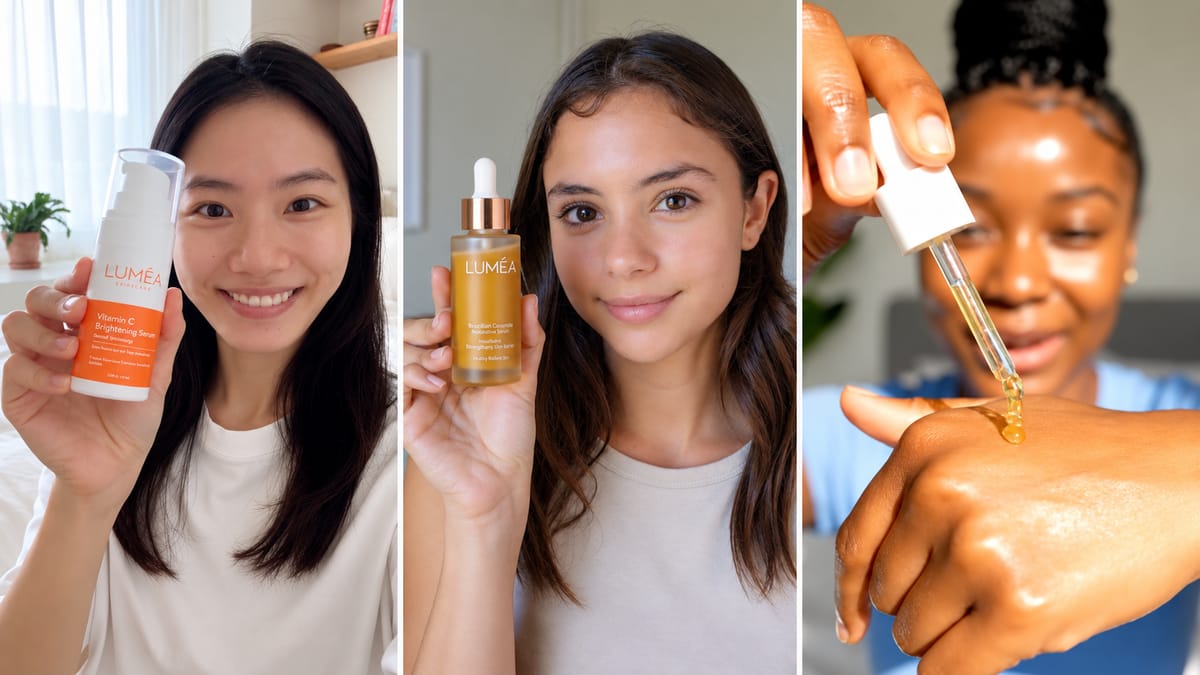
Prompt: Create a 10-second vertical 9:16 UGC-style advertisement for LUMÉA Vitamin C Brightening Serum. A young female content creator is filming herself with a smartphone in a bright, naturally lit bedroom.
Scene 1 (0–3s): She picks up the LUMÉA Vitamin C Brightening Serum and holds the bottle close to the camera, showing the packaging naturally.
Scene 2 (3–7s): She puts one drop of the serum onto the back of her hand and gently spreads it with her fingers, showing the lightweight golden texture.
Scene 3 (7–10s): She looks at the camera and reacts positively, then briefly holds the LUMÉA serum beside her face.
Make the video feel authentic and native to TikTok and Instagram rather than like a polished TV commercial. Use natural indoor lighting, realistic facial expressions, casual smartphone framing, and subtle handheld camera movement. Keep the creator's appearance, hands, and the LUMÉA product consistent throughout the entire video. Keep the bottle shape, logo, cap, and colors accurate. Avoid exaggerated acting, artificial beauty-commercial lighting, distorted hands, distorted facial features, distorted packaging, extra products, random text, or logos.
| Model | Observed result | Final video length | Generation Time | Failed or regenerated |
|---|---|---|---|---|
| Seedance 2.5 | The creator remained visually consistent throughout the clip, with realistic-looking skin and hand movement. Product details also stayed clear, and the full 10-second output matched the casual UGC-style brief. | 10s | ~2–2.5 min | 0 |
| Kling 3.0 | Natural indoor lighting and handheld framing created a convincing UGC-style result. The creator and product remained visually consistent across the full 10-second clip. | 10s | ~3–4 min | 0 |
| Veo 3.1 | Natural lighting, handheld camera movement, and realistic creator reactions produced a convincing UGC-style result. The creator presentation felt natural, but the output ended at 8 seconds rather than completing the requested 10-second brief. | 8s | ~2–3 min | 0 |
TikTok Ad Test
Prompt: Create a 10-second vertical 9:16 TikTok advertisement for LUMÉA Vitamin C Brightening Serum.
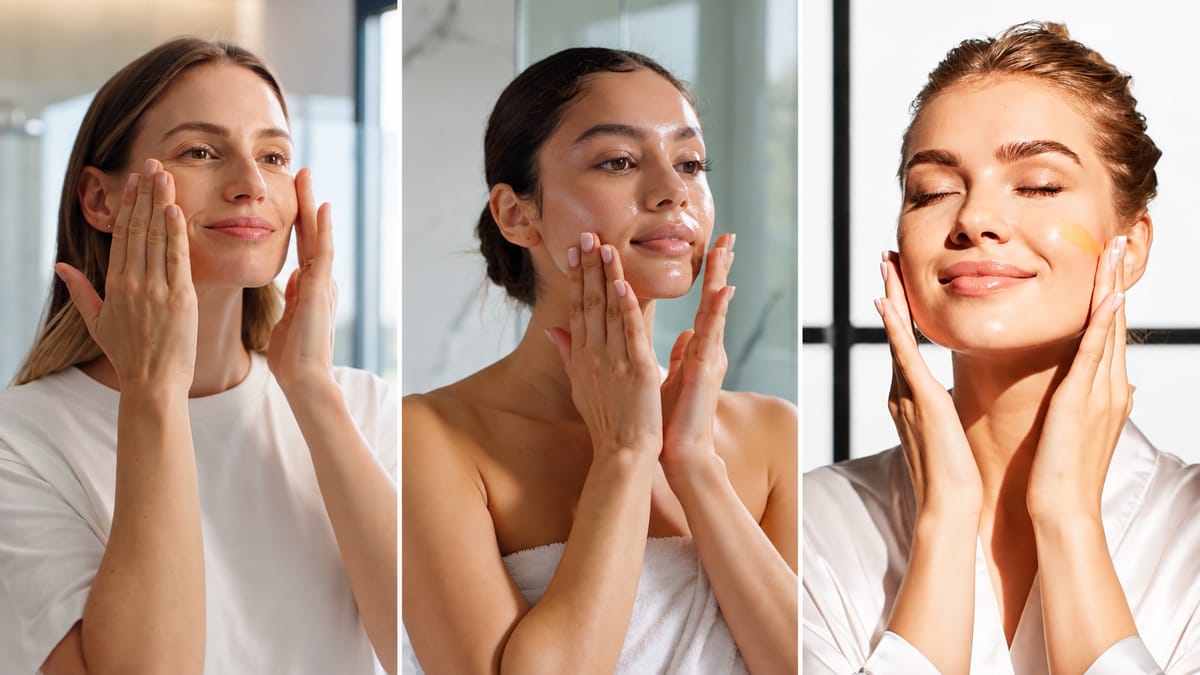
Scene 1 (0–2s): Start immediately with a strong visual hook. Show an extreme close-up of a single drop of lightweight golden serum falling from the LUMÉA glass dropper onto the back of a hand.
Scene 2 (2–5s): Quickly cut to a young woman applying the serum to her face in a bright modern bathroom. Show a natural, smooth application motion.
Scene 3 (5–8s): Cut to a close-up of the LUMÉA serum bottle and dropper. Slowly rotate or move the camera around the product to reveal its premium packaging.
Scene 4 (8–10s): Finish with a clean hero shot of the LUMÉA serum bottle centered in frame.
Use fast-paced social-media-style editing, visually engaging transitions, realistic skin and serum texture, bright natural lighting, and a modern beauty aesthetic. The first two seconds should immediately capture attention. Keep the LUMÉA logo, bottle shape, cap, colors, and proportions consistent throughout the entire video. Do not add extra products. Do not distort the packaging, hands, or face. Do not add random text, logos, or watermarks.
| Model | Observed result | Final video length | Generation time | Failed or regenerated |
|---|---|---|---|---|
| Seedance 2.5 | The opening delivered a clear visual hook, while product consistency and realistic-looking skin texture were maintained throughout the full 10-second clip. The result matched the fast-paced short-form direction of the brief. | 10s | ~4 min | 0 |
| Kling 3.0 | The serum-drop opening created a clear visual hook, with realistic product and skin detail that suited the fast-paced short-form brief. It also completed the full 10-second requested duration. | 10s | ~2–3 min | 0 |
| Veo 3.1 | The output opened with a strong visual hook and fast-paced editing, with realistic-looking product detail and a polished beauty-ad aesthetic. The visual execution matched the short-form direction well, although the clip ended at 8 seconds. | 8s | ~4–5 min | 0 |
What these test figures mean
The observed results below are based on the test notes currently available for these runs. Because the original video outputs could not be re-reviewed for this article, prompt details that were not documented in those notes are not treated as confirmed.
Across these nine recorded runs, none of the generations failed or required another attempt.
Seedance 2.5 and Kling 3.0 both returned the requested 10-second length in all three briefs. Veo 3.1 returned 8 seconds in each test because of its single-generation duration limit under the settings used here.
Generation time varied between individual runs. Because each result comes from a single recorded generation rather than repeated benchmark testing, the timings show what happened in these tests rather than establishing which model is generally faster.
The Router Test is based on outputs generated inside BuzzVideo AI. Published model specifications are included elsewhere in this article for context, but they describe what a model is designed to support rather than what it achieved in these test runs.
Resolution and per-generation credit usage could not be independently verified from the surviving test records, so they are not used to compare or rank the models in this article.
For example, ByteDance states that Seedance 2.5 supports longer single-pass generation and up to 30 images, 10 video clips, and 10 audio clips as reference material. We did not test those limits here, so they should not be treated as evidence that Seedance 2.5 is faster, more stable, or better for longer advertising workflows.
Seedance 2.5, Kling 3.0, and Veo 3.1: what each is built for
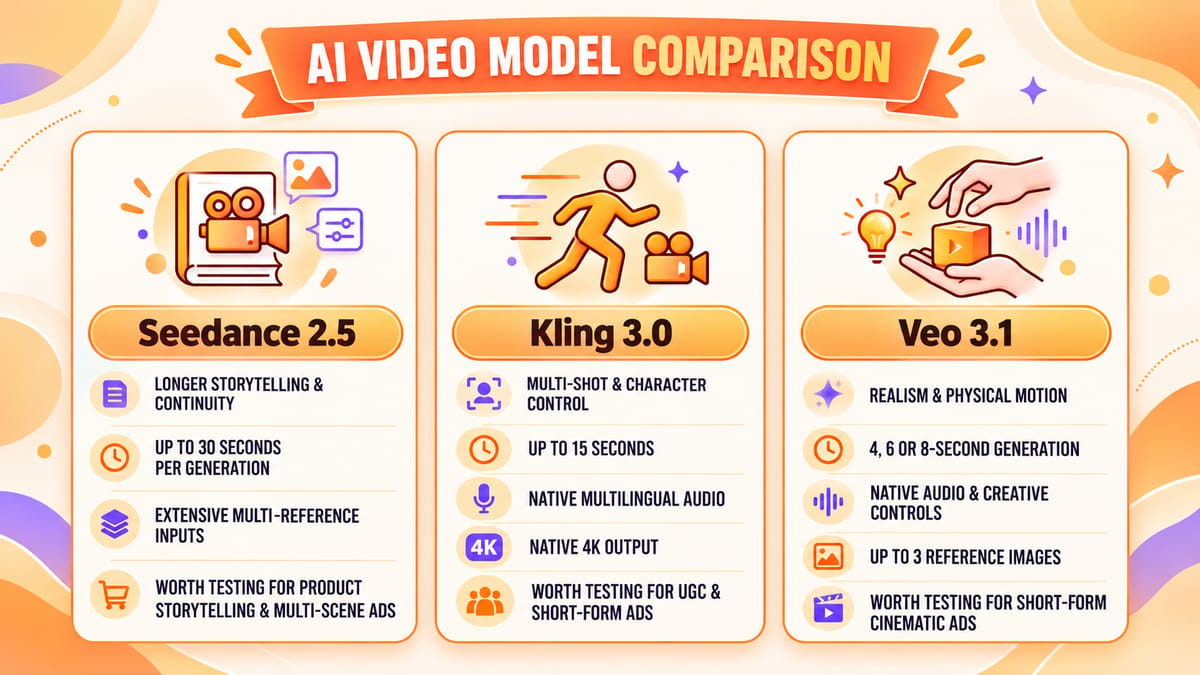
Published capabilities shown here were not all tested in our Router Test.
Seedance 2.5: built for longer narratives and complex references
If your ad needs characters, products, and scenes to remain consistent across multiple shots, Seedance 2.5 is worth testing.
According to ByteDance Seed's official Seedance 2.5 announcement, Seedance 2.5 can generate videos up to 30 seconds in a single pass and supports multiple rounds of extension. ByteDance also highlights improvements in longer-form storytelling, shot transitions, and continuity across characters and scenes.
The model also supports extensive multimodal reference inputs. A single generation can use up to 30 images, 10 video clips, and 10 audio clips as reference material, giving creators more control over characters, products, scenes, motion, and sound.
We did not test Seedance 2.5 at its 30-second limit or with its maximum number of reference inputs in the Router Test, so these capabilities should be treated as reasons to test it for more complex workflows rather than proof that it performs better in those scenarios.
Worth testing for: product storytelling, character consistency, multi-scene ads, and projects that rely heavily on reference material.
Kling 3.0: built for multi-shot control and short-form creative
Kling 3.0 is worth considering when a brief involves character movement, multiple shots, product-focused creative, dialogue, or detailed camera direction.
According to Kuaishou's official Kling AI 3.0 announcement, the Kling AI 3.0 series supports videos up to 15 seconds, native audio across multiple languages, dialects, and accents, and full multimodal input and output spanning text, images, audio, and video. Kuaishou also highlights stronger consistency, more precise shot control, and support for multi-shot storytelling.
In our own tests, Kling 3.0 completed the full 10-second requirement across the product, UGC, and TikTok briefs. Its UGC and TikTok outputs also showed convincing motion, framing, and short-form pacing. These results describe the specific clips we generated rather than proving that Kling 3.0 is the strongest model for every product or short-form advertising scenario.
Worth testing for: UGC ads, character-led creative, multi-shot videos, product demonstrations, and short-form campaigns.
Veo 3.1: built for realism, physics, audio, and creative control**
Google's Veo 3.1 combines video generation with native audio and supports text-to-video, image-to-video, reference images, video extension, first-and-last-frame control, and other creative controls.
According to Google's Gemini API documentation, Veo 3.1 supports 4-, 6-, and 8-second video generation. An 8-second duration is required when using reference images, video extension, or 1080p and 4K output. The model also supports portrait 9:16 video and up to three reference images to guide the appearance of a person, character, or product.
That duration limit matters for longer advertising formats. An 8-second generation may be enough for a short hook, product moment, or social clip, while a longer narrative requires additional generation or extension steps. Those extra steps can change the production workflow, time, and cost, so they should not be treated as equivalent to generating a longer clip in a single pass.
In our Router Test, Veo 3.1 produced particularly realistic serum texture and physical motion, but it returned only 8 seconds against our 10-second briefs. We therefore treated its visual execution separately from whether it completed the requested duration.
Worth testing for: ads where visual realism, physical motion, native audio, prompt adherence, and short-form cinematic quality are priorities.
Multi-model platforms vs. single-model tools

If your workflow relies on one AI video model and it consistently meets your needs, using that model's own platform may be the simplest option.
The trade-off becomes more noticeable when your team produces different types of creative. A product video, UGC-style ad, and short-form social clip may place different demands on product consistency, character motion, realism, video length, audio, or generation cost.
Using separate platforms for different models can also mean managing multiple:
- Accounts and subscriptions
- Credit or pricing systems
- Interfaces and workflows
- Input and reference requirements
- Output libraries and project files
A multi-model platform can simplify that process by letting you test different generators within the same workflow. On BuzzVideo AI, for example, models including Seedance, Kling, and Veo are available in one platform, allowing teams to switch models depending on the requirements of each brief.
In our Router Test, this meant we could run the same product, UGC, and TikTok briefs across Seedance 2.5, Kling 3.0, and Veo 3.1 within the same workflow, then compare the outputs side by side without moving between separate platforms.
That does not mean a multi-model platform is automatically the better choice for every team. If one model already covers most of your production needs, a single-model workflow may be simpler. But if your work regularly moves between product videos, UGC ads, short-form creative, and other formats, having access to several models in one workspace can make comparison and iteration more convenient.
The practical advantage is flexibility: instead of choosing one model for every project, you can test which available model is better suited to the brief in front of you.
Which model should your team test first?
The right choice depends on the types of videos your team produces, how often you create them, and how much flexibility you need between different models.
If you're a solo creator or small brand: Start with the types of content you produce most often. If you mainly create product clips, UGC-style videos, or short-form social ads, test Seedance 2.5, Kling 3.0, and Veo 3.1 on the same brief and compare the outputs that matter most to you, such as visual consistency, video length, generation time, and cost. If you regularly switch between different types of creative, having several models available in one workflow may also make testing easier.
If you're a DTC brand or freelance marketer: You may need different models for different campaign requirements rather than one generator for every ad. Based on the scenarios covered in our Router Test:
- Product video → Start with Seedance 2.5 or Kling 3.0
- UGC ads → Start with Seedance 2.5 or Kling 3.0
- TikTok / short-form → Start with Kling 3.0 or Seedance 2.5
- Brand storytelling → Not tested
We did not run a dedicated brand-storytelling test, so longer narrative work should be evaluated separately rather than assigned to a specific model based only on published specifications.
If you're an agency or in-house marketing team: Managing several brands or ad formats can make model flexibility more important. Instead of choosing one model as the default for every project, it may be more practical to keep a small set of tested options and choose between them based on the brief.
For example, one model may perform better on a product-focused campaign, while another may be more suitable when realistic motion, audio, longer duration, or specific reference controls matter more.
The goal is not to find one model that is always "best." It is to build a repeatable testing process that helps your team choose the most suitable model for each type of creative.
FAQs
1. Which AI video generator is the best?
There is no single AI video generator that is best for every advertising use case. In our three short-form ad tests, Seedance 2.5 and Kling 3.0 were both worth testing first for product videos and UGC ads, while both also completed the full 10-second TikTok-style brief with convincing short-form results. Veo 3.1 stood out for realistic texture and physical motion, but returned 8-second clips rather than the requested 10 seconds.
We have not tested longer narrative or dedicated brand-video workflows, so those use cases should be evaluated separately.
2. Is there a truly 100% free AI video generator?
Free access varies between AI video platforms. Some services may offer limited free generation, trial credits, or restricted features, so it is important to check what is actually included before choosing a tool.
On BuzzVideo AI, the Free plan currently includes 500 one-time credits for supported image-generation features, but video generation requires a paid plan. Model access also varies by plan.
3. What are the best AI video generators, and how much do they cost?
Seedance 2.5, Kling 3.0, and Veo 3.1 are among the models worth comparing for advertising workflows, but their costs vary by model, video length, resolution, settings, and platform.
On BuzzVideo AI, each model uses a different number of credits per generation. As of October 2026, BuzzVideo AI's published examples include Seedance 2.5 at 417 credits for a 10-second HD video, Veo 3.1 at 576 credits for an 8-second HD video, Veo 3.1 Fast at 144 credits for an 8-second HD video, and Kling 3.0 at 63 credits for a 5-second video.
Pricing and model availability can change, so check the BuzzVideo AI pricing page for the latest credit requirements and plan access before estimating campaign costs.
4. What is the most realistic AI video model?
There is no universal "most realistic" model because results can vary depending on the subject, motion, lighting, materials, prompt, and type of scene.
In our three advertising tests, Veo 3.1 stood out for realistic serum texture and physical motion, but that finding applies only to the specific briefs we tested. Google DeepMind also highlights Veo 3.1's realism, realistic physics, prompt adherence, and native audio capabilities.
ByteDance, meanwhile, emphasizes Seedance 2.5's longer-form storytelling, motion consistency, continuity, and reference control. For ad production, testing the same brief across models is more useful than assuming one model will look the most realistic in every scenario.
Which AI video generator should you actually use?
There is no single AI video generator that will be the best choice for every advertising brief. Based only on the three short-form ad tests in our Router Test, Seedance 2.5 and Kling 3.0 are both worth testing first for product videos and UGC ads. Both also completed the full 10-second TikTok-style brief with convincing short-form results. Veo 3.1 stood out for realistic serum texture and physical motion, but returned 8-second clips rather than the requested 10 seconds.
These findings apply only to the three short-form advertising scenarios we tested. We have not yet compared the models on longer narrative or dedicated brand-video briefs, so published capabilities such as longer generation limits should be treated as reasons to test a model rather than proof that it performs better in those workflows.
For marketing teams producing different types of ad creative, it may be more practical to keep several models available rather than choosing one generator for every project. Product consistency, motion, realism, audio, video length, reference control, generation time, and cost can all change which model makes the most sense for a particular brief.
The best approach is to test the same brief across the models you are considering, compare the outputs against the requirements that matter to your team, and choose based on the actual result.
Try Seedance 2.5 on BuzzVideo AI, or compare different models in your own advertising workflow to see which one fits your next brief.

About the author
Hai Taeng
SEO Content Editor
With experience in SEO content writing and optimization, I enjoy exploring new topics, finding fresh angles, and making complex subjects easier to understand. I believe good content should be clear, useful, and engaging. My goal is to create well-researched, easy-to-follow content that answers readers' questions, offers practical tips, and inspires them to discover something new.