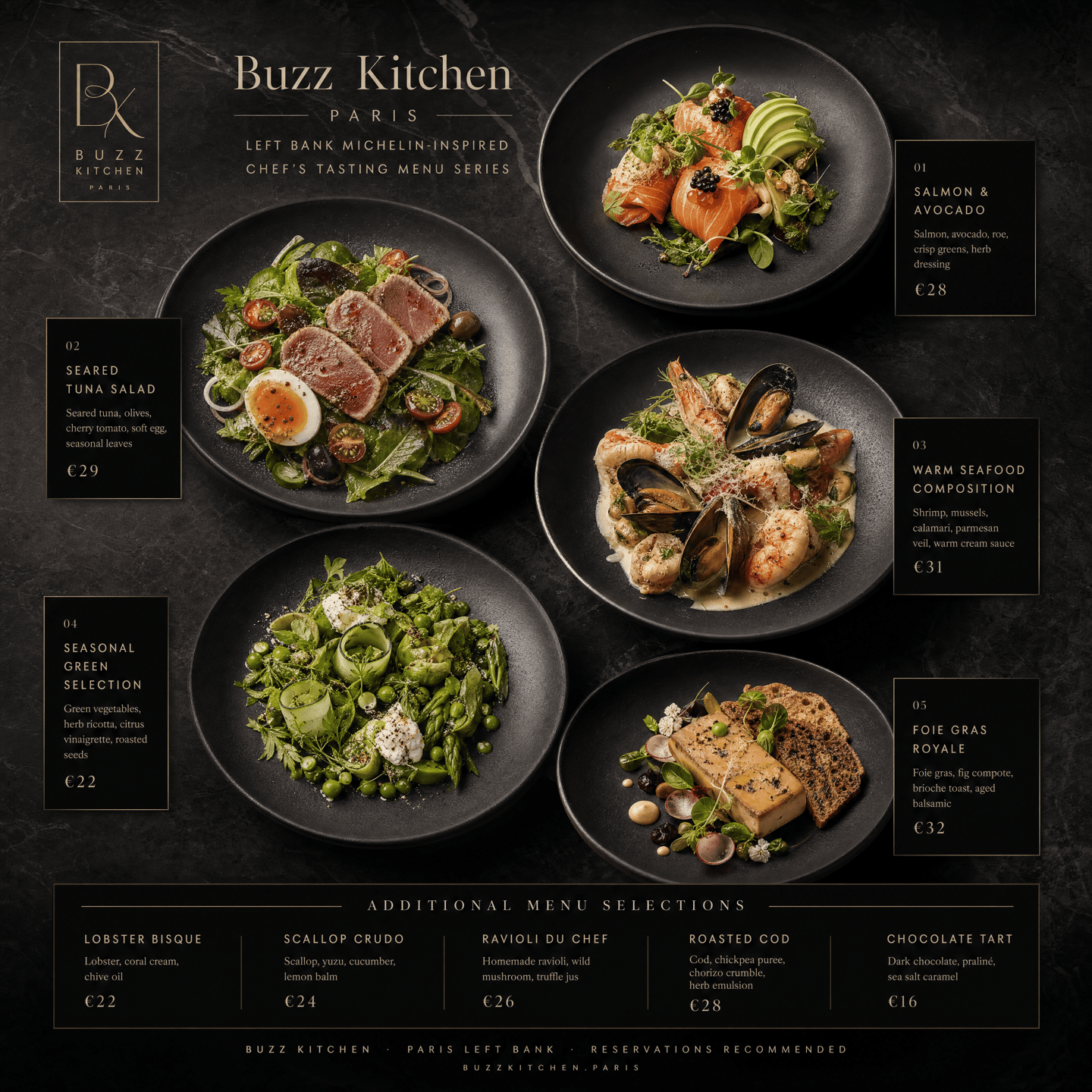
Create an ultra-premium event poster for Buzz Kitchen, reimagining a Michelin-inspired, Left Bank-style French chef's tasting menu as a sophisticated, multi-course composition. Fully maintain the existing Buzz Kitchen brand identity: contemporary French fine dining, Left Bank sophistication, a chef-driven tasting menu ethos, quiet luxury, editorial restraint, and high-end culinary realism. The image must feel like a high-end restaurant menu poster—not a casual food collage—featuring strong spatial order, elegant black information blocks, and an atmosphere of luxurious gastronomy. Utilize a vertical poster layout inspired by high-end multi-course menu designs. Arrange multiple Buzz Kitchen dishes across the poster in a carefully balanced, staggered composition, viewed from a slightly elevated, top-down angle. Plates should be purposefully distributed across the page, allowing for breathing room, asymmetrical harmony, and a strong editorial hierarchy. The overall structure should include: multiple "hero" dishes positioned in the upper and middle sections; several black rectangular information panels near each featured plate; and a wide information band at the bottom listing additional menu items. The layout must feel clean, graphic, highly controlled, and undeniably upscale. The background should be a luxurious dark stone or smoky marble surface, featuring subtle organic veining, a soft matte texture, and refined tonal variations. It must feel architectural, expensive, and quietly dramatic—the perfect foundation for the dishes and typography. Exclude casual restaurant settings, table clutter, diners, or decorative props unrelated to the cuisine. Feature three to five signature Buzz Kitchen dishes as the primary visual elements, each served on elegant matte black or dark charcoal ceramic plates. These dishes must belong to the same Michelin-inspired French tasting menu concept: refined composed salads, exquisite seafood courses, modern French vegetable arrangements, chef-driven plated appetizers, or elegant light entrée combinations. The plating must feel highly intentional, modern, restrained, and crafted by a chef. Each dish must be presented with exceptional realism: tiny droplets of moisture on greens, the natural sheen on seafood or proteins, fine vegetable textures, silky sauce details, exquisite plating, clean plate rims, and Michelin-level culinary precision. The food must look premium, fresh, balanced, and highly appetizing—never rustic or casual. Suggested dishes for the feature plates include: an exquisite salmon and avocado pairing accented with caviar and crisp greens; a precision-cut, elegantly garnished tuna or seared fish salad; a warm seafood salad featuring mussels, shrimp, and a delicate cream sauce; and other contemporary French salads or tasting menu dishes consistent with the Buzz Kitchen brand style. All dishes should maintain a modern, elegant, and Parisian sensibility. Typography and information architecture are crucial. Place elegant black information cards next to or overlapping the plates; each card should feature the dish name, a brief English description, and the price. The cards must feel like part of a graphic design system rather than cheap menu labels. Use sophisticated, editorial-style typography with clear hierarchy, refined spacing, and luxurious typesetting specifications. Include the restaurant identity—the primary English title "Buzz Kitchen"—in the top or upper-middle area. The title treatment should feel understated and elegant—consistent with the existing Buzz Kitchen collection—rather than loud or oversized. Create a custom Buzz Kitchen logo that aligns with the collection: minimalist, architectural, timeless, Parisian, editorial, and high-end international. The logo can appear near the title area or be subtly integrated into one of the menu information sections. For each black information card, use English dish names and descriptions as the primary system. Example directions: "Salmon & Avocado," "Seared Tuna Salad," "Warm Seafood Composition," "Seasonal Green Selection." Descriptions should read like concise, upscale menu copy—e.g., "Salmon, avocado, roe, crisp greens, herb dressing"; "Seared tuna, olives, cherry tomato, soft egg, seasonal leaves"; "Shrimp, mussels, calamari, parmesan veil, warm cream sauce." Include elegant price symbols styled for a high-end menu. At the bottom of the poster, create a full-width black menu band divided into sections; each section lists additional dish names, brief English descriptions, and prices within a clean, editorial layout. This bottom strip must feel graphic, luxurious, and structurally significant. The lighting should be soft, cinematic, and high-end: gentle overhead light, quiet silhouettes, subtle rim highlights on the plates, the natural sheen of ingredients, soft reflections in sauces, and a fine tonal fall-off across the stone background. The atmosphere must feel intimate, expensive, and editorial—like an advertisement for a Michelin-starred restaurant in a luxury culinary magazine. The color palette should remain within the original Buzz Kitchen series world: warm black, deep charcoal, limestone, soft ivory, sage green, olive, buttery cream, seafood coral tones, subtle toasted hues, and restrained champagne highlights. The tones must remain sophisticated and appetizing, avoiding excessive saturation or bright commercial styles. The overall tone must be: Parisian flair, chef-driven, editorial menu design, Michelin-inspired, refined, gourmet, quiet, architectural, luxurious, and highly curated. Rendering style: hyper-realistic food photography, Left Bank Parisian restaurant menu poster, multiple dishes plated on black ceramics, dark marble background, elegant black editorial info cards, custom LAKERO logo, refined menu typography, soft cinematic luxury lighting, Michelin-grade food styling, high-end event quality, 8K, world-class commercial quality. Negative prompts: cheap menu items, casual café vibe, rustic bistro clutter, alcohol-centric hero objects, dominant wine bottles, bright commercial food ads, crowded cutlery, messy plating, cartoonish food, fast-food styling, generic logos, loud typography, flat lighting, noisy composition, low-end brochure design, excessive props, plastic-looking ingredients, weak brand identity.